
Planning a Low-Water Landscape: Design Tips for a Lush, Sustainable Landscape
You want a beautiful yard that does not guzzle water or your budget. Good news, you do not have to choose between lush and low-water. With smart plant selection, thoughtful design, and efficient irrigation, you can have a vibrant outdoor space that looks good all year and supports local ecology. At Living Landscapes, we start with a careful Site Assessment and a tailored Design Proposal, so you have a clear plan, a realistic budget range, and the confidence to move forward.
Start With a Site Assessment
Great low-water landscapes begin with what your property is already telling us. Sun and shade patterns, wind corridors, soil type, drainage, and existing plants all shape what will thrive with minimal inputs. During our Site Assessment, we walk your property with you, listen to your vision, and note microclimates, constraints, and opportunities. This step helps us right-size your project and avoid costly mistakes.
From there, you receive a Design Proposal that outlines the scope, deliverables, and clarifies design expectations. During our Final Design Meeting we will review all design materials and review your Construction Proposal so that we can move into installation seamlessly.
Choose Plants That Do More With Less
Low-water does not mean sparse. Aim for a layered planting design for color, texture, and habitat.
Structure plants: Four-season anchors like serviceberry, rabbitbrush, Rocky Mountain juniper, and native ornamental grasses offer bones and movement.
Shrubs and accents: Currants, artemisia, dwarf sumac, and manzanita for texture and seasonal interest.
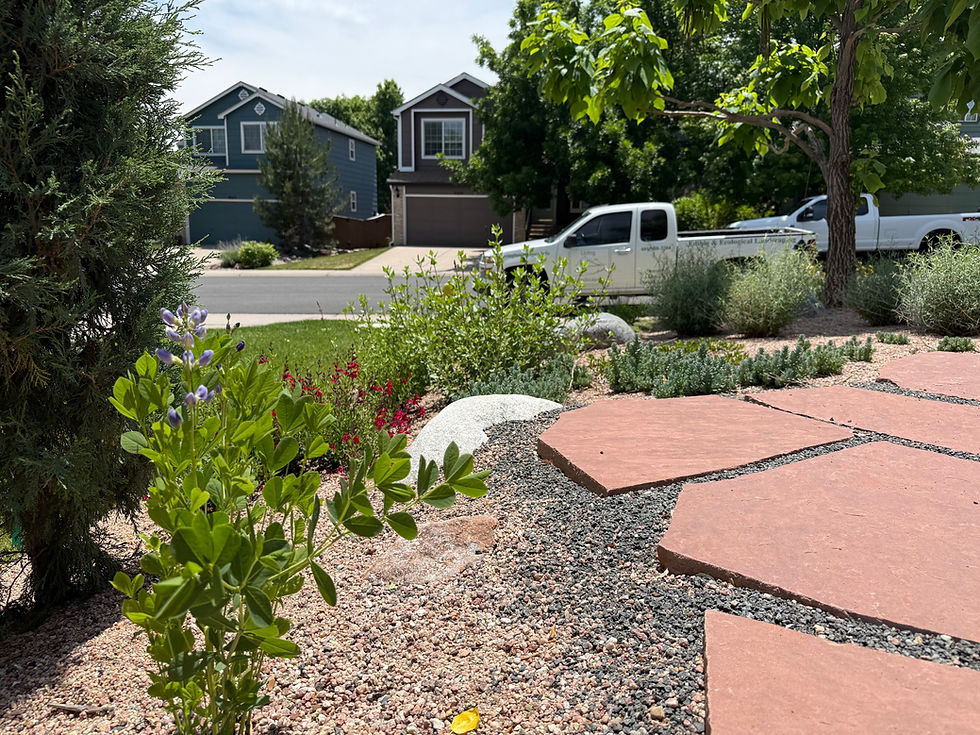
Perennials and groundcovers: Penstemon, blanketflower, agastache, yarrow, prairie zinnia, creeping thyme, and sedum deliver blooms and pollinator support.
Edible elements: Blueberries are tricky in our soils, but raspberries, hardy grapes, rhubarb, strawberries, and herbs like sage, thyme, and oregano perform beautifully with the right soil prep.
Rethink “Lawn” As Green, Not Grass... or at least not Kentucky Bluegrass
If you love the look of green, consider a blended approach.
Shrink the turf: Keep a small, purposeful patch for play or pets. You might consider Tahoma 31, a low- water bermuda grass instead of Kentucky bluegrass for water savings and still a tough, "traditional" lawn". If you'd like to move into further native, xeric interventions, seeding with blue grama and buffalo grass can create a beautiful no- mow "lawn".
Replace with stepables: Creeping thyme or yarrow to offer soft texture and seasonal bloom with far less water.
Use ornamental grasses and evergreen groundcovers for a meadow feel that moves with the breeze and stays attractive through winter.
Design Tricks for Year-Round Appeal
A water-wise landscape becomes irresistible when it feels alive in every season.
Color sequencing: Stagger bloom times from early spring bulbs through late fall asters.
Texture contrast: Pair fine-textured grasses with broad-leaf perennials or glossy evergreen forms.
Winter bones: Evergreens, sculptural branches, and boulders keep the view engaging after frost.
Fragrance and sound: Plant near patios and paths for scent and plant grasses where wind can create a gentle rustle.
Irrigation That Saves Water and Headaches
Water efficiency is about precision.
Drip irrigation: Deliver water directly to roots, reduce evaporation, and adjust zones by plant type.
Smart controllers: Weather-based scheduling prevents overwatering after storms and adapts to seasonal shifts.
Mulch: Two to three inches of composted mulch cools soil and reduces evaporation. It also feeds the soil life that keeps plants healthy. Rock mulch, such as, squeegee or a smaller aggregate pea gravel allow for water infiltration to plant roots. Plant selection ought to determine your mulch approach.
If you are refreshing hardscapes as part of your plan, we integrate irrigation sleeves and conduit so future maintenance is easy and costs stay down. If you are exploring patios or pergolas, our team coordinates layout and water lines together so the whole space works as one.
What Is a Realistic Budget for Landscaping?
Budgets vary with scope and materials, but here is a helpful way to think:
Refresh projects, such as plant replacement, mulch, and drip upgrades, often start in the low thousands.
Partial redesigns, including new beds, a small patio, and irrigation improvements, typically land in the mid-range.
Full design-build projects, with comprehensive plantings, custom hardscapes, and lighting, require a higher investment.
Your Site Assessment and Design Proposal clarify all of this. You will see line items and priorities, plus phasing options, so you can make a smart plan that fits your timeline.
What Is Most Cost-Effective for Landscaping?
The best returns tend to come from:
Drip irrigation and a smart controller, which reduce water bills and plant loss.
Right plant, right place, which means fewer replacements.
Modest hardscape that supports how you live, like a properly sized patio that aligns with your daily use.
If you plan to add features like a pergola or retaining wall later, design now and phase installation later, if needed. Planning it upfront avoids rework and extra costs.
Should You Tell the Landscaper Your Budget?
Yes, please. Transparency helps us design within your comfort zone, recommend the most cost-effective options, and offer smart phasing. With a shared budget target, we can balance plant density, material choices, and must-have features without surprises. Our proposals make this visible so you feel in control. It also allows for designing through a specific budgetary lens to ensure we can move seamlessly into installation.
Is It Worth Spending Money on Landscaping?
Absolutely. A well-designed, low-water landscape pays you back through lower water use, less maintenance, better curb appeal, and a space that invites you outside. It can increase home value, but the real return is daily enjoyment, shade, beauty, and habitat. When a landscape supports pollinators and conserves resources, it supports you too.
How We Make Sustainable Look Stylish
We love combining ecological planting with crafted hardscapes for an elevated finish. If you are dreaming about a refined outdoor room alongside your xeric beds, explore options with experienced teams who can coordinate materials, grading, and irrigation as one. For inspiration specific to our region, you can browse sustainable landscaping projects in Denver on our site to see how a water-wise approach can still feel lush and welcoming.
If you are in Lakewood or the west metro, our process often begins with a Site Assessment request, then moves into a design that fits your home’s architecture and microclimate. As a patio contractor in Denver we can think through and 3-D model different shade structures and pergolas to see how we pair plant-forward design with long-lasting hardscapes.
Next Steps
Book a Site Assessment so we can walk your property together.
Share your wish list and your budget, even if it is a range.
Decide what to tackle now and what to phase. We will design for the full vision and build in stages if that works best.
Summary
A low-water landscape can be lush, colorful, and timeless. Start with a Site Assessment, choose plants that thrive with less, design for year-round beauty, and install efficient irrigation. Be open about your budget so your design proposal reflects your priorities and sets a clear path forward. When done well, sustainable landscaping is both smart and stylish, and it makes daily life outside feel effortless. If you are ready to reimagine your yard, we would love to help you create a Living Landscape that saves water, looks beautiful, and feels like home.




Comments